Roof Savers South Carolina
  • Columbia SC - 803-678-9222
    Myrtle Beach SC -843-733-4342
    Charleston SC - 843-790-2299
    Greenville /Spartanburg - 864-686-6500


    (833) 736-8348

    Free Estimate

Roof Savers South Carolina
  • Services
    • Quick Roof Repair
    • Apply Roof Savers/Renueit™ Treatment
    • Roof Soft Wash
    • Renueit Wood Armour/Siding/Metal
    • Roof Tune-Up
  • About Us
    • Our Warranty
    • Testimonials
      • Submit Testimonial
  • What We Do
    • Multi-Family / Commercial
    • FAQ
    • Savings
    • Videos
  • Free Estimate
  • Gallery
  • Contact

About Us

  • Home
  • About Us

Blog

August 10, 2026

Understanding Your Roof Warranty and Coverage

By Jenny, Homeowner Education & Preventative Care

Imagine this: a strong storm rolls through your neighborhood, and the next morning you notice a few shingles scattered across your yard. Naturally, your first thought is, "That's okay, my roof is still under warranty." But after making a few phone calls, you discover that the damage isn't covered the way you expected. Suddenly, what seemed like a simple situation becomes confusing, frustrating, and potentially expensive.

As a homeowner, one of the most valuable things you can understand isn't just how your roof works, but how your roof warranty works. Many people assume a warranty is a blanket promise that covers any roofing problem. In reality, warranties have limitations, conditions, and responsibilities that every homeowner should know.

At Roof Savers®, we often meet homeowners who are surprised by what their warranty does and doesn't include. The more informed you are before a problem happens, the better prepared you'll be to protect both your home and your investment.

One of the biggest misunderstandings is believing that every roof warranty is the same. In truth, there are several types of warranties, and each serves a different purpose. A manufacturer's warranty generally covers defects in the roofing materials themselves. If shingles fail because of a manufacturing issue, that may fall under the manufacturer's responsibility. However, if the problem is caused by improper installation, storm damage, lack of maintenance, or normal aging, that same warranty may not apply.

There are also workmanship warranties, which are typically provided by the roofing contractor. These warranties cover installation-related issues rather than the materials themselves. Even the best roofing products can experience problems if they aren't installed correctly, which is why choosing an experienced roofing contractor is just as important as selecting quality materials.

Many homeowners also believe that a warranty lasts exactly as long as the number printed on the paperwork. A "30-year warranty" sounds straightforward, but it doesn't necessarily mean every aspect of your roof is fully covered for thirty years. Warranty terms often change over time, and coverage may decrease depending on the age of the roof and the specific conditions outlined in the agreement.

Another common misconception is that warranties eliminate the need for maintenance. This couldn't be further from the truth. In fact, many warranties require homeowners to properly maintain their roof. Neglecting routine care, allowing debris to accumulate, ignoring damaged shingles, or failing to address small issues promptly can sometimes affect warranty eligibility.

Think of it this way. When you buy a new vehicle, the warranty doesn't mean you never have to change the oil or rotate the tires. The manufacturer expects you to take reasonable care of the vehicle. Roofing warranties work much the same way. Regular inspections and preventative maintenance help ensure your roof continues performing as intended while also supporting warranty requirements.

Weather is another area where homeowners often become confused. Across North America, roofs are exposed to everything from intense summer heat and hailstorms to hurricanes, heavy snow, and freezing temperatures. While your roof is designed to withstand normal weather conditions, many warranties distinguish between manufacturing defects and damage caused by severe weather events.

For example, if a hailstorm causes impact damage or high winds tear shingles from the roof, your homeowner's insurance policy may become more relevant than your roofing warranty. Understanding the difference between insurance coverage and warranty coverage helps avoid unpleasant surprises when filing a claim.

It's also important to remember that a warranty doesn't stop the natural aging process. Asphalt shingles gradually change as they're exposed to sunlight, moisture, temperature fluctuations, and environmental conditions. Over time, materials become less flexible, granules begin to wear, and overall performance naturally declines. These changes are expected and typically aren't considered manufacturing defects.

This is where preservation can play an important role. Rather than waiting until a roof has deteriorated to the point where replacement becomes the only option, many homeowners are now choosing to preserve asphalt shingle roofs while they are still structurally sound.

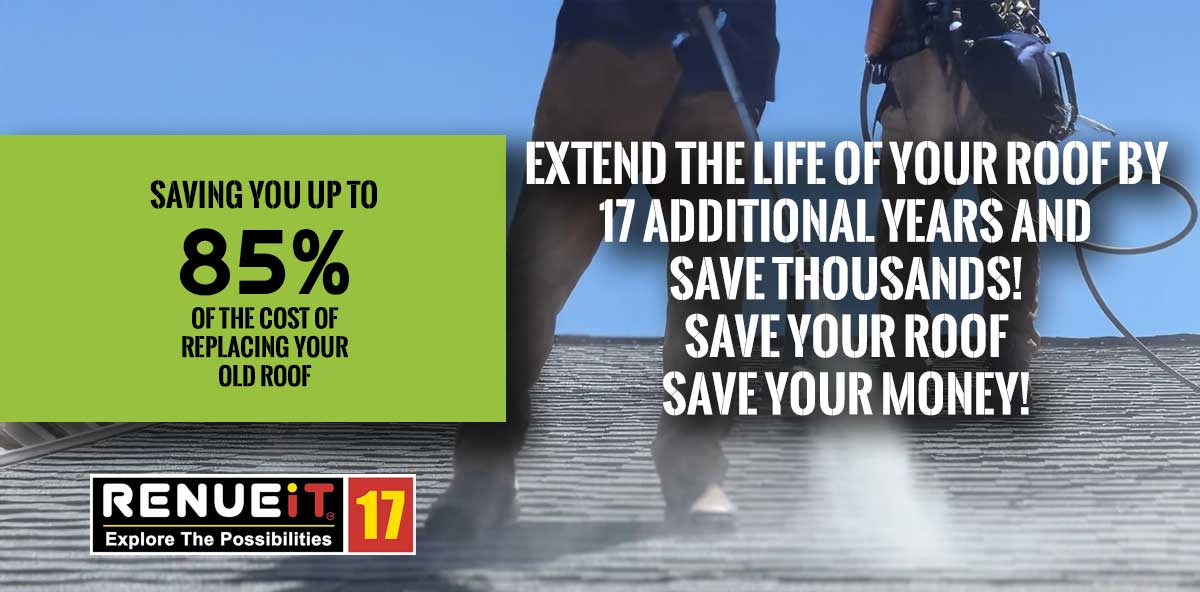
At Roof Savers®, preservation treatments like Renueit®17 provide homeowners with another option for protecting their roofing investment. It has been lab tested and proven to extend roof life by an additional 17 years with just one application. Rather than replacing a roof that still has years of useful life remaining, preservation helps homeowners maximize the performance of their existing roof.

Keeping records is another simple habit that can make a big difference. Save copies of your warranty documents, inspection reports, maintenance records, and any repair invoices. If questions ever arise about your roof's condition or warranty coverage, having organized documentation can make the process much smoother.

Perhaps the most important takeaway is that a warranty should never replace regular roof care. The homeowners who get the most value from their roofs are often the ones who schedule periodic inspections, address small concerns early, and understand the responsibilities that come with owning a roofing system.

Your roof protects everything beneath it, your family, your belongings, and one of your largest financial investments. Taking the time to understand your warranty helps you make smarter decisions long before problems occur.

A warranty offers valuable protection, but knowledge offers something even greater: confidence. When you understand what your roof warranty covers, what it doesn't cover, and how preservation strategies from Roof Savers® can help extend the life of a qualifying asphalt shingle roof, you're in a much better position to protect your home.


August 03, 2026

The Science Behind Roof Preservation Treatments

By Allen Childs, Roof Preservation Systems

When homeowners hear the word chemistry, they often imagine a laboratory filled with test tubes and complex formulas. But chemistry plays a much bigger role in everyday life than most people realize. Every time you paint a wall, stain a deck, wash your driveway, or protect your roof, chemistry is at work.

The same is true for roof preservation.

Over the years, I've had many homeowners ask me, "What exactly are you putting on my roof?" It's a fair question. If you're investing in protecting one of the most valuable parts of your home, you deserve to understand how the treatment works and why it's different from other products on the market.

Roof preservation isn't about covering up problems or making an old roof look newer for a few months. It's about applying proven science to help aging roofing materials continue performing the job they were designed to do.

At Roof Savers®, we believe homeowners should understand the science behind preservation just as much as the results.

Every Roof Changes at the Molecular Level

An asphalt shingle roof doesn't suddenly become old overnight. Aging happens slowly through thousands of days of exposure to sunlight, rain, wind, temperature swings, and airborne contaminants.

As these environmental conditions continue year after year, the physical properties of the shingles begin to change. The surface becomes more vulnerable, flexibility decreases, and the protective layer gradually weakens.

These changes are part of a natural chemical aging process. The goal of roof preservation is to interrupt that process before deterioration reaches the point where replacement becomes the only option.

That's where preservation chemistry becomes important.

Preservation Is More Than Cleaning a Roof

One misconception I hear is that roof preservation is simply roof cleaning.

Cleaning is certainly an important first step, but it is only the beginning.

Before any preservation treatment is applied, the roof must first be properly prepared. That means removing oxidation, mold, algae, dirt, and other contaminants that have accumulated over time.

Think of it like painting a wall. You wouldn't paint over peeling paint and expect lasting results. The surface has to be properly prepared before any protective treatment can bond effectively.

At Roof Savers®, every qualifying roof undergoes this preparation process before Renueit®17 is applied. A clean surface allows the preservation technology to perform as intended.

Different Preservation Technologies Use Different Chemistry

Not all roof preservation products are designed the same way.

For many years, some preservation systems have relied on bio-based oil formulations, such as soy methyl ester. These products are designed to penetrate asphalt shingles with the goal of improving flexibility.

That approach has been available in the industry for some time.

Our philosophy is different.

Rather than concentrating only on penetration, Renueit®17 focuses on preserving one of the roof's most valuable protective assets, its granules.

I've often explained it this way:

If you keep the granules on the shingles, you keep the roof on the house longer.

Those granules aren't simply decorative. They shield the asphalt beneath from ultraviolet radiation, weather exposure, and environmental stress. Once granules begin washing into gutters or collecting in driveways, the aging process accelerates.

Preserving that protective layer is one of the most important parts of extending roof life.


Renueit®17 is not an oil-based treatment.

It is a patent-pending water-based polymer roof preservation treatment that incorporates proprietary MicroCrazeVR™ and RocLoc™ Technologies. These technologies were developed to support the long-term performance of asphalt shingle roofs while helping maintain granule adhesion and improve material flexibility.

Unlike products that require repeated applications over time, Renueit®17 is designed as a one-time preservation treatment. When applied to a qualifying asphalt shingle roof, it has been lab tested and proven to add 17 additional years of life with a single application.

That difference is significant for homeowners. Rather than scheduling multiple treatments over many years, a single preservation application can deliver long-term protection while reducing both cost and disruption.

Why One Application Matters

One question I hear frequently is why one application is enough.

The answer lies in the chemistry of the formulation itself.

Renueit®17 was engineered to create long-lasting protection rather than temporary surface improvement. Once properly applied to a prepared roof, the treatment works with the existing roofing materials to help preserve their performance over time.

Some competing preservation systems recommend multiple applications over the course of fifteen years to achieve their expected lifespan.

Our approach is different.

One properly prepared roof.

One professionally applied treatment.

One preservation strategy focused on extending roof life by 17 additional years.

For homeowners, that means fewer service visits, lower long-term costs, and less interruption.

Preservation Benefits Beyond the Roof

The chemistry behind preservation also supports something larger than roof performance.

Every year, millions of tons of roofing materials end up in landfills, even though many roofs still have years of useful life remaining.

When preservation can safely extend the lifespan of a qualifying roof, homeowners reduce construction waste while avoiding premature replacement.

That's good for the homeowner's budget, and it's a more environmentally responsible approach to maintaining a home.

The same preservation philosophy extends beyond asphalt shingles. Renueit® technology can also restore and preserve vinyl siding, cedar shake, Hardie® Board, stucco, tile, wood, and metal surfaces, helping improve appearance while extending service life.

Preservation Starts with Timing

One of the biggest mistakes homeowners make is waiting too long.

Once severe structural deterioration has occurred, preservation is no longer the appropriate solution. That's why regular inspections are so important.

The best candidates for preservation are roofs that are aging but still structurally sound.

Taking action early gives homeowners more options and helps avoid emergency repairs that often cost significantly more than preventative care.

The chemistry behind roof preservation isn't about creating a cosmetic improvement. It's about using modern material science to slow the natural aging process and help roofing systems continue performing as intended.

At Roof Savers®, our preservation philosophy is built on proven technology, thoughtful preparation, and long-term performance. Renueit®17 focuses on preserving the roof's protective granules, because those granules are essential to the longevity of an asphalt shingle roof.

When applied at the right stage of a roof's life, preservation isn't simply an alternative to replacement. It's a smarter way to protect your investment, reduce unnecessary waste, and keep your roof performing for years to come.


July 27, 2026

Why Some Roofs Last Longer Than Others

By Russell Beckum, Roofing Systems & Performance Specialist

If you've ever driven through an older neighborhood, you've probably noticed something interesting. Two homes built around the same time can have completely different-looking roofs. One roof still looks solid and continues to perform well, while the one next door has already been replaced.

Homeowners often ask me, "Why did their roof last longer than mine?"

After years of working with roofing systems, I've learned that there isn't one simple answer. Roof longevity isn't determined by luck, and it isn't determined by age alone. It's the result of many factors working together over time.

Some of those factors are within your control. Others are simply part of the environment where you live. The good news is that understanding what affects roof performance can help you make better decisions and potentially add years to the life of your roof.

At Roof Savers®, we believe homeowners deserve to know why some roofs outperform others because knowing the reasons behind roof longevity helps protect one of the biggest investments you'll ever make.

One of the biggest misconceptions homeowners have is that every roof has the same lifespan.

That's simply not true.

Imagine two identical pickup trucks leaving the dealership on the same day. One spends its life hauling heavy equipment every day, while the other is driven only on weekends. Even though they're the same model, they'll age very differently.

Roofs work the same way.

Two houses may have identical asphalt shingles installed by the same contractor, yet one roof may last years longer because it's exposed to different weather, receives regular maintenance, and experiences fewer environmental stresses.

A roof's life story is written by how it's treated every single day.

Climate Plays a Bigger Role Than Most People Realize

Where you live has a tremendous impact on how your roof performs.

A roof in Arizona spends years absorbing intense sunlight and extreme heat. A home in Florida deals with humidity, tropical storms, and algae growth. Roofs throughout the Carolinas and Georgia regularly face heavy rain and strong winds, while homes farther north endure snow, ice, and repeated freeze-thaw cycles.

Every climate places different demands on roofing materials.

Over time, sunlight breaks down asphalt, temperature changes create expansion and contraction, and moisture finds every opportunity to challenge your roof's protective layers.

That's why it's impossible to judge a roof's condition based on age alone. Climate often tells a much bigger story.

Installation Quality Matters More Than the Brand Name

Homeowners often spend a lot of time choosing roofing materials but overlook something even more important, the quality of the installation.

I've seen premium roofing products fail early because they weren't installed correctly. I've also seen standard materials perform exceptionally well because every detail was done right.

Proper flashing, correct nail placement, adequate ventilation, and attention to drainage all influence how a roof performs over time.

The best roofing material in the world can't overcome poor workmanship.

Ventilation Is the Unsung Hero

Ask most homeowners what makes a roof last longer, and ventilation usually isn't the first answer.

But it should be.

A roof isn't just the shingles you see from the street. It's an entire system, and proper airflow plays a major role in protecting that system.

Without good ventilation, heat builds up in the attic during summer while moisture accumulates throughout the year. That combination accelerates aging, weakens roofing materials, and can even affect the structural components beneath the shingles.

Good ventilation allows the entire roofing system to perform the way it was designed.

Small Problems Rarely Stay Small

One of the biggest differences I see between roofs that last and roofs that fail early comes down to maintenance.

A lifted shingle today may become a leak next season.

Loose flashing today could become interior water damage after the next heavy rain.

Granules collecting in the gutter today may be an early sign that your roof needs attention.

The homeowners whose roofs last the longest are usually the ones who address small issues before they become expensive ones.

The Importance of Protecting Asphalt Shingles

Asphalt shingles naturally lose flexibility as they age. Years of sunlight, weather exposure, and temperature changes gradually affect their ability to perform.

Many people assume this automatically means replacement is the next step.

In reality, many asphalt shingle roofs remain structurally sound even as they begin showing signs of age.

That's where preservation becomes an important part of roof longevity.

One of the most important things we look at isn't simply the age of the roof. It's whether the roof is still performing.

That's a very different conversation than assuming every aging roof needs immediate replacement.


I often compare roof inspections to annual health checkups. You don't wait until you're seriously sick before seeing a doctor.

Your roof deserves the same mindset.

Professional inspections help identify issues that homeowners may never notice from the ground. Loose flashing, worn sealants, early granule loss, and small storm damage are often discovered long before they become major problems.

That gives homeowners options instead of surprises.

A Roof Is More Than Just Shingles

One thing I've learned after years of evaluating roofing systems is this: roofs don't succeed because of one component.

Longevity comes from how every part of the system works together.

The shingles matter.

Ventilation matters.

Flashing matters.

Drainage matters.

Maintenance matters.

When one part is neglected, the entire system begins to suffer.

There isn't a secret formula that makes one roof outlast another.

Instead, roof longevity is the result of consistent care, quality installation, favorable environmental conditions, and proactive maintenance.

While homeowners can't control the weather, they can control how they care for their roof.

By scheduling regular inspections, addressing small issues early, and considering preservation solutions from Roof Savers® such as Renueit®17, homeowners can help their asphalt shingle roof perform better and last significantly longer.

After all, the goal isn't simply to have a roof over your head today. It's to keep that roof protecting your family for as many years as possible.


Roof Savers Charlotte

600 E. Trade St.
Charlotte, , NC 28202

: (704) 469-9599


Roof Savers Greenville-Spartanburg-Asheville

3305 Rutherford Road
Taylors, SC 29687

Greenville-Spartanburg-Ashville: (864) 686-6500


Roof Savers Myrtle Beach

-
Myrtle Beach, SC 29572

Myrtle Beach: (843) 733-4342


Roof Savers South Carolina

4342 Evans to Locks Rd
Evans, GA 30809

Charleston: (803) 678-9222


Share
Roof Savers Georgia LLC | All Content copyright © - 2026